The Daddyfication of Rohit Saraf: A Case Study in Cinematic Glow-Ups
- Urvashi More
- 4 hours ago
- 4 min read

A completely serious cultural investigation into how Bollywood’s soft boy became… dangerously distracting. By a very serious journalist and completely unbiased researcher

There are glow-ups.
And then there are phenomena.
In the cinematic ecosystem, few transformations have been as quietly fascinating as the evolution of Rohit Saraf, an actor who somehow began his career already handsome yet continued to improve like a well-written screenplay that only gets richer with every act.
Phase One: The Soft-Boy Era


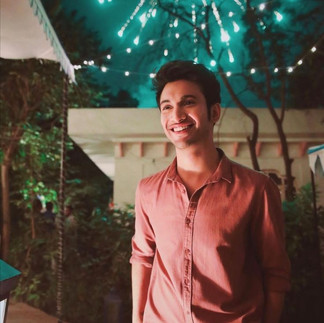


In the early stages of his career, Saraf embodied what researchers might call Peak Soft Boy Energy.
Large expressive eyes. Gentle features. A face that looked permanently apologetic in the most endearing way.
He resembled the kind of boy who would:
say "sorry" even when someone else bumped into him
hold doors open for strangers
look slightly confused if someone flirted with him
In short: dangerously charming but harmless. Early field studies suggested this particular combination of politeness and large expressive eyes was capable of destabilizing entire friend groups.
Cinematic evidence from this era includes films and roles that leaned heavily into this sincerity. The soft-boy Saraf could be seen across projects like Dear Zindagi, Hichki, The Sky Is Pink, Ludo, Mismatched Season 1, and even the quietly charming Kamali from Nadukaveri phase of his career.
At this stage, the Saraf aesthetic was defined by sincerity and boyish warmth, the type of screen presence that made audiences trust him instantly. Unfortunately for global emotional stability, the evolution did not stop there.
Phase Two: The Transitional Era


Then came what scholars of the Saraf Phenomenon now refer to as The Tall, Lean Phase.
This era introduced:
height
sharper jawlines
A BEARD
slightly longer hair
a growing confidence in physicality
The actor still maintained his soft charm, but there were hints that something else was forming beneath the surface. Something… more dangerous.
This transitional energy was visible in projects such as Mismatched Seasons 2 and 3, as well as the chaotic college nostalgia of Ishq Vishk Rebound and the Mani Ratnam universe entry Thug Life.
At this stage the public largely remained unaware of what was about to happen. But certain early observers, particularly obsessive cinephiles, such as yours truly, with too much time on Instagram, began noticing subtle shifts.
The posture changed. The walk changed. The smile gained a new level of quiet confidence and the transformation had begun.
Phase Three: The Daddyfication


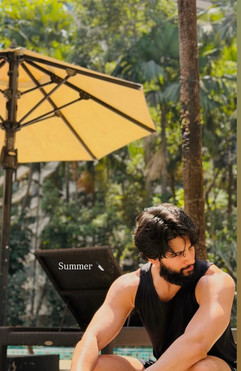



And then, seemingly overnight, the transformation reached its final form. The forearms appeared. The shoulders broadened. The soft boy smile remained, but now carried an entirely different weight.
This stage introduced the world to what can only be described as:
The Daddyfication of Rohit Saraf.
The projects defining this era reflect that shift as well. With roles in Sunny Sanskari Ki Tulsi Kumari, the upcoming The Revolutionaries, Heer Ranjha, and Mismatched Season 4, Saraf now exists in a cinematic space where the soft boy has fully evolved into something more confident, more self-aware, and significantly more distracting.
Even Saraf himself acknowledges that the shift did not happen entirely by accident. In an interview discussing his recent physical transformation, the actor explained that the glow‑up was partly the result of preparing for upcoming roles.
"A little bit of everything," he said when asked about the motivation behind the change. "Of course, the primary reason was the roles I was prepping for. But if the final outcome rubs some exes the wrong way… I’m not above that at all."
This level of honesty has not helped stabilize the situation. This new era of Saraf includes:
quiet confidence
a stronger physical presence
an effortless ability to look both intimidating and soft at the same time
The consequences of this transformation have been immediate and measurable. When asked about the influx of attention following his glow‑up, Saraf responded with remarkable composure:
"I never ignore DMs. It is my responsibility as a public figure to make sure all thirsts are quenched."
Researchers are still debating whether this statement was meant literally or metaphorically. At the time of writing, this researcher would also like to note that her own DMs remain unanswered, suggesting that the quenching of thirsts may still require some follow‑up work from Mr. Saraf’s side.
The result is a rare cinematic archetype. Not the traditional hero. Not the familiar boy-next-door. But something far more dangerous:
The man who still feels like the boy audiences fell in love with, just evolved.
Why This Glow-Up Matters
Glow-ups are common in cinema. But the Saraf evolution is unusual because the core essence never disappeared. The sweetness remained. The humour remained. The sincerity remained. Only the confidence grew.
Saraf himself has described the shift less as a transformation and more as a natural progression. In a recent interview, he explained:
"I don’t think it’s as much a transformation as it is an evolution. I’m still the hopeless romantic who believes in true love."
Which explains why the phenomenon feels so destabilizing. The same soft‑hearted boy audiences trusted is now also… very distracting. And yet, when asked whether the internet’s new "dangerous" perception of him is accurate, Saraf seems unconvinced.
"Dangerous? That word and I are a complete mismatch," he insists. "Haven’t you heard? I’m a walking green forest."
Unfortunately for public emotional stability, this statement has not convinced anyone. For researchers studying cinematic charisma, the conclusion is simple:
The Daddyfication of Rohit Saraf is not merely a glow‑up. It is a narrative arc. And like all good narratives it only becomes more compelling with time. Further research is ongoing. Primarily for scientific purposes.


Comments